Our Products
Compressed Air Solutions
  • Screw Air Compressor
  • Oil Free Compressor
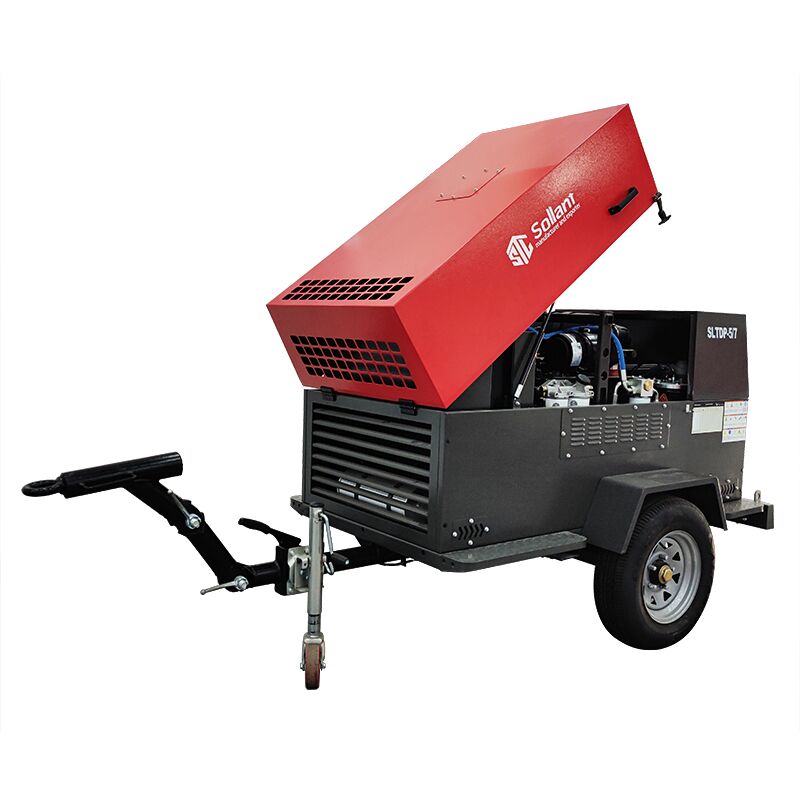
  • Diesel Portable Compressor
  • Gas Compressor
  • Specialty Compressor
  • Air Treatment
ISO 9001 Certified
24-Month Warranty
OEM & ODM Support
Factory Direct Price
All products→
Air Compressors for Cement and Concrete Plants
Industrial Applications

Air Compressors for Cement and Concrete Plants

Technical Guide
45 min read

Compressed air at cement plants gets blamed for almost nothing considering how much it breaks. A kiln upset gets investigated as combustion. Conveying slowdowns end up in the maintenance system as mechanical faults. Bag filter opacity exceedances get chalked up to bag condition or fan performance. The people investigating have backgrounds in chemistry and thermal engineering. The compressor room is maintained by a different crew who file different work orders and attend different meetings.

Cement is a hard environment for this equipment. Dust loading on intake filters exceeds the rated ambient by a factor of fifty in the worst locations on site. Demand swings a third when a mill trips. Cooling systems struggle on summer afternoons across the whole band from Casablanca to Chennai. Some of these topics are well covered in the general compressed air literature and do not need extensive repetition here. Others are specific to cement and concrete and get almost no coverage anywhere.

Section One
01

Shared Versus Separate Air Systems

Cement plant compressed air system
Instrument air network — precision over volume

Process air: conveying, aeration, pulse cleaning, utility blowdowns. 3,000 to 12,000 Nm³/h depending on the plant. Class 4.

Instrument air: positioners, actuators, I/P converters, purges. 500 to 2,000 Nm³/h. Class 1.2.1.

Whether these two networks share compressors or run independently is a decision that gets made once during engineering by someone filling out a design basis document, and then sits in the infrastructure for the life of the plant, which in cement is often thirty years or more. It is possible to retrofit separate systems later. It is expensive and disruptive and it almost never happens.

On a shared system the instrument air branch draws from the same header as the process air, with additional drying and filtration on the branch. On a process and instrumentation diagram this looks clean enough. On a running cement plant at 2 PM on a Tuesday when the raw mill bag filter has just restarted after a maintenance stop and a conveying cycle has begun on the long line to silo 4 and the blending system has opened aeration valves on silos 1 through 3, the header is down half a bar or a full bar and the instrument air dryer is trying to dry air at an inlet pressure it was not designed for.

The dryer performance depends on inlet pressure. Lower inlet pressure means the air moves faster through the desiccant bed. Contact time drops. Moisture removal gets worse. For thirty or sixty or ninety seconds, instrument air quality drops below the Class 1.2.1 spec. Wetter. Dirtier.

A positioner does not care about one thirty-second exposure to wet air.

A positioner does care about eight hundred thirty-second exposures over the course of a year. Or twelve hundred. The count depends on how many process consumers the plant has and how often they happen to overlap, which on a large plant with three mills and four bag filters and a dozen silo circuits and an AF system and whatever utility connections maintenance has added to the header over the years, is several times per shift.

Spool valves pick up contamination gradually. The friction changes. The response gets slower. The DCS auto-tuning adjusts parameters to compensate. The operator sees the kiln running slightly less tightly than it used to and cannot point to a specific date when it changed.

The instrument technician replaces the positioner during a shutdown and writes "normal wear" on the work order. The replacement starts drifting within six months because it breathes the same air the old one did.

This is the kind of problem that can persist for the entire operating life of a plant because there is no acute failure event to trigger an investigation. The positioner did not explode. The kiln did not trip. The bag filter did not catch fire. Control quality degraded by a few percent. Everyone adjusted. The replacement rate became the baseline.

Design Principle

Separate compressors, dryers, receivers, headers. Cross-tie for emergency backup with its own treatment. More money during construction. Less money during the following thirty years. Those two numbers hit different budgets. The people approving the construction budget in year zero are not the people absorbing the maintenance cost in year twelve.

This dynamic between capital and operating expenditure shows up repeatedly across compressed air decisions in cement plants. It is mentioned here once rather than being restated for each topic.

Receivers for the instrument air network. The Atlas Copco Compressed Air Manual recommends 1 to 3 minutes of receiver capacity at average consumption for general industrial service. Cement needs more. Around 10 minutes minimum. The scenario is a compressor trip during a voltage transient on the medium-voltage bus. Bus holds, kiln keeps running, compressor contactor dropped out, auto-restart logic waiting for voltage stabilization. If the receiver empties before restart, damper actuators lose authority. Kiln trips uncontrolled. Refractory damage. One event costs more than every receiver on the plant.

Old carbon steel instrument air piping. Plants that have been running fifteen or twenty years with carbon steel between the dryer and the instruments. Internal corrosion. Fine iron oxide. Downstream of the last filter so the filter cannot catch it. Rides the airflow to the positioner. The entire treatment chain can be performing perfectly at the dryer outlet and the positioner still gets contaminated air because the pipe itself is the source. Stainless or copper for the last 15 to 20 meters to each critical instrument. Per-run cost less than the positioner at the end of it.

Section Two
02

Compressor Types

Oil-free rotary screw compressor
Two-stage intercooled oil-free screw — standard for instrument air

Oil-free screw for instrument air. Oil-injected for process. Centrifugals for base load on big plants. Choosing between these categories is generally obvious from the application. The engineering problems specific to cement are more interesting than the selection question itself.

Oil-free screw machines. Two-stage intercooled. Class 0 per the ISO standard. Premium of 40 to 60% over oil-injected, sometimes more. The intercooling between stages reduces the moisture load on the dryer. In tropical plants, dryer maintenance cost drops over a few years. That saving accrues to the dryer maintenance budget and is invisible during compressor bid evaluation. Catalog FAD at 35°C. At 45°C ambient, output drops and cooling effectiveness drops and humidity is high, all at the same time on the same afternoon.

Shaft seals between the gearbox and the compression chamber. When the seal wears, gearbox oil crosses into the air path. Machine still labeled Class 0. Symptom shows up at the dryer or the carbon filter as premature media degradation, not at the compressor where the problem originates. Oil vapor measurement at the discharge per ISO 8573-5 confirms it. The seal service interval is shorter than the airend overhaul interval. Most plants replace seals during overhauls rather than on their own schedule.

Class 0 at the compressor discharge does not mean Class 0 at the point of use. Intake air at a cement plant carries hydrocarbon vapors from diesel equipment and fuel handling. These pass through. Activated carbon filtration downstream handles them. Most Class 0 installations at cement plants do not have this filtration.

Oil-injected screw machines for process air. Downstream treatment elements foul faster than published intervals in cement environments. Cut change intervals based on site conditions. Synthetic lubricant extends airend overhaul intervals over mineral oil. Lock consumable pricing over 40,000 hours in the purchase contract or watch the cheap compressor with the expensive proprietary filters win the bid.

Reciprocating machines still exist for pressures above 10 bar and for dense-phase conveying with mostly-idle duty cycles where near-zero idle power consumption matters.

Section Three
03

Centrifugal Surge and Fouling

Centrifugal compressors on cement plant base-load duty. Single frame. 5,000 to 30,000 Nm³/h. 6 to 8 bar gauge. Inherently oil-free. Few wearing parts.

Surge occurs when impeller flow drops below a critical threshold and the aerodynamic flow separates and reverses. The pressure oscillation can destroy the machine in seconds. See API Standard 617 for the formal treatment. In refining or gas processing, demand is usually stable enough to size the machine above the surge line at minimum load. Cement does not allow this because the demand swing between all-mills-running and kiln-only can be a third or more of total air consumption, and the transition happens in minutes when a mill trips.

Blow-off valves vent air to atmosphere to keep impeller flow above the limit. During kiln-only periods the energy going through the blow-off is substantial and gets absorbed into the monthly electricity bill without separate tracking. Predictive anti-surge controllers from CCC (now Honeywell) calculate the boundary from live conditions and coordinate guide vanes and recycle valve. On a large frame the energy savings justify the controller within a couple of years.

Fouling is where this gets specific to cement and where centrifugal installations go wrong in ways that produce confusing diagnostic sequences.

Trace calcium dust passes through intake filtration. The particles are fine enough to pass the filter and heavy enough to deposit on impeller blades and diffuser vanes under the centrifugal loading in the stage. The buildup is slow. There is no alarm for it. There is no instrument watching it. Daily data does not show it because the performance shift is smaller than measurement scatter and instrument drift. Weekly data probably does not either. Maybe after a couple of months a trend in discharge pressure at a given flow becomes visible if someone is looking at the right chart with the right scale against the right baseline, which requires a commissioning baseline that someone thought to preserve and that survived the DCS migration and the server upgrade and the personnel turnover and the office reorganization.

Over many months, the deposit changes impeller aerodynamics enough to shift the compressor map. Surge line migrates to higher flow. Efficiency drops. Choke line moves inward. A machine that ran at 70% flow with generous surge margin at commissioning starts seeing surge at 78 or 80%.

The anti-surge controller is running a map from commissioning. The controller calculates margin based on where the surge line used to be. The map has moved. The controller has not.

Here is what the diagnostic sequence looks like from the maintenance side. The machine surges. Or maybe it goes into incipient surge and the controller catches it with a late recycle valve opening. The control room records the event. Maintenance investigates. They check the anti-surge controller. Logic is correct. They check the recycle valve. Strokes fine. They check the inlet guide vanes. Respond correctly to signal. They check the inlet filter differential pressure. Normal. They check the vibration trending. No bearing issue. They check the oil system. Temperature and pressure normal. They check the cooling water temperature. Normal.

Everything in the protection system and the auxiliary systems tests good. The surge happened anyway.

The report says "spurious surge event, cause undetermined" or "transient event, monitoring." File closed.

Two months later it happens again. At a slightly higher flow because the fouling has progressed. Same investigation. Same result. Everything checks out. Someone suggests the surge algorithm might need retuning. The Honeywell or CCC field service engineer comes in, reviews the algorithm configuration, and says it is correct. Which it is. The algorithm is configured correctly for the compressor that was installed and tested at commissioning. That compressor had clean impellers. The impellers now have a calcium deposit that has shifted their aerodynamic characteristics.

The field service engineer may or may not recognize this. It depends on whether they have seen fouling-related surge events at other cement plants. Some have. Some have not. If the diagnosis is not made at this point, the events continue at increasing frequency as the fouling progresses. Each time, the investigation finds nothing wrong because the investigation checks the protection system and the protection system is functioning correctly against a map that is no longer accurate.

Performance testing reveals the map shift. Three or four operating points across the flow range, controlled conditions, measuring inlet temperature and pressure, discharge temperature and pressure, flow, motor power. Plot against the commissioning performance curves. Shift in the surge line shows up immediately. Drop in polytropic efficiency at the design point confirms fouling as opposed to other causes of map shift like damage or erosion.

Online water wash restores the map on machines designed for it. Not all machines are. Check the OEM documentation for the specific impeller material and coating compatibility before attempting water wash. Offline cleaning during a kiln stop works on any machine regardless of design.

After cleaning, the performance map returns to near-original condition and the anti-surge controller's commissioning map is valid again.

Whether periodic performance testing gets scheduled depends on whether anyone at the plant has seen this failure mode before. If they have, the test goes on the maintenance schedule and gets run every six months or before and after each cleaning. If they have not, the tests do not happen and the undetermined-cause surge events continue until something expensive breaks or someone with the right experience visits the site.

Best Configuration

Large plant configuration: centrifugal base load with VSD oil-free screw machines for trim. The screw machines absorb demand swings and keep the centrifugal away from surge during mill-off periods. They also cover when the centrifugal goes down for cleaning.

Section Four
04

Bag Filter Pulse Cleaning

Pulse cleaning on a kiln/raw mill bag filter accounts for 15 to 25% of total plant compressed air and this section is long because the waste is large and fixable without capital expenditure.

New bags commission. High permeability. Low differential pressure. Pulse controller at factory defaults from the bag filter supplier. Interval somewhere around 15 to 20 seconds between pulses. Duration 100 to 150 ms. Cleaning mode set to time-interval: pulse every N seconds whether the bags need cleaning or not. Air consumption modest.

Years pass. Bags age. Permeability drops. The residual dust cake that stays on the bag surface after each cleaning pulse gets thicker and more tightly bonded because the bag surface is rougher and the pore structure has been partially penetrated by fine particulate. Baseline dP rises. The dP alarm triggers more often. The control room operator has this alarm competing with dozens of others. Kiln back-end temperature. Coal mill outlet temperature. VRM vibration. Stack opacity. Clinker free lime. AF feed rate. Cooler undergrate pressure. The bag filter dP alarm gets acknowledged and the alarm setpoint gets bumped upward to suppress it. From 12 mbar to 15. Later to 18. Maybe to 20 on a plant where the bags are old and the operating team has given up trying to keep dP below the original design value.

The pulse controller has a dP-response algorithm. It sees the higher dP. It shortens the interval between pulses. From 18 seconds to 14. Then 12. Then 10. The controller does it automatically according to its internal programming. Each reduction consumes more compressed air. The change is small per step. Over thousands of hours the consumption climbs to double or triple the commissioning value without generating any step-change alarm or any entry in any operating report.

Five or seven years later. Bags are old. Some individually replaced, so the bag population is mixed ages and conditions. Baseline dP is permanently high. Alarm setpoint has been bumped multiple times. Pulse interval is down to 6 or 8 seconds. Pulse duration is still at the factory default of 120 or 150 ms because the duration parameter lives three menu levels deep in the controller software and the only person who touched it was the bag filter supplier's commissioning engineer who left site years ago.

Pull up the pulse settings and compare them to the commissioning record. If the commissioning record exists. It might be in a binder that the bag filter supplier's project engineer took with him to his next project. It might be on a CD in a filing cabinet. It might be in the DCS historian if someone thought to log the pulse controller parameters at commissioning, which on most plants, no, they did not.

The re-optimization takes a competent process engineer two to three days of focused work at the controller, physically present at the bag filter because the dP response to each parameter change needs to be observed over a few hours of operation.

Walk the pulse interval up in increments. Set it to 10 seconds. Watch dP for three or four hours. If dP stays in an acceptable band, set it to 12. Watch again. Keep going until dP starts climbing beyond what is acceptable for that filter and that bag condition. Back off one increment. That is the optimized interval for current conditions. It needs rechecking when bags are replaced because new bags tolerate longer intervals.

Cut the pulse duration. The factory default of 120 to 150 ms is conservative. It is set conservatively because the bag filter supplier does not want warranty calls about inadequate cleaning and a longer pulse always cleans at least as well as a shorter one, it just wastes more air. For most cement kiln dust on polyester needlefelt bags, 60 to 80 ms delivers an effective cleaning pulse. On PTFE-membrane bags the cake releases from the smooth membrane surface more readily and shorter durations can work. Going below the effective minimum is immediately apparent as rising dP and easily corrected. There is no risk of damage from testing shorter durations.

Switch from time-interval cleaning to dP-triggered cleaning. Instead of pulsing every N seconds regardless of whether the bags need it, the controller pulses when dP reaches a setpoint. During mill-off periods when dust loading drops, the system pulses less. Sections of the filter that are lightly loaded get cleaned less often. The system matches its air consumption to the cleaning demand rather than running a fixed schedule.

Combined reduction runs 20 to 40% relative to the drifted settings. The variation across plants is wide because it depends on how far settings had drifted, which depends on bag age, dust characteristics, original controller programming, how aggressively the operator bumped alarm setpoints.

Key Barrier

The bag filter sits under the process department. The compressed air system sits under mechanical maintenance. Neither department's performance metrics capture the other's energy use. The process engineer does not track bag filter air consumption. The maintenance engineer does not have login credentials for the bag filter controller PLC. The optimization requires someone who can work across both domains and who has authority or at least tacit permission to change parameters on equipment belonging to another department.

Section Five
05

Concrete

Concrete batch plant compressed air
Ready-mix batch plant — short bursts, high receiver dependence

Batch Plants

Demand in short bursts. Bin gate actuation, vibrator operation, mixer drum blowout. 10 to 15 seconds of draw, then minutes of near-zero consumption. The receiver tank does the work in this application. If the receiver is undersized, every burst drops tank pressure far enough that the compressor slams from unloaded to loaded and back. Loading valve hammering. Motor inrush. Contactor arcing. Motor thermal protection tripping at 3 PM with four trucks waiting.

Size the receiver for at least 3 minutes of compressor run time at worst-case peak demand rate. VSD screw machines track the intermittent curve. IP54 on the drive enclosure, higher near aggregate stockpiles. Two-stage intake filtration because concrete plants generate cement dust and aggregate dust and sand and admixture aerosol all at the same time and the standard single-stage panel element cannot handle the combined loading.

Mixer washout air gets left out of the demand profile during sizing. At end of production, high-pressure air blasts residual concrete out of the drum and chute. Large sudden draw arriving when the batching cycle is winding down and the compressor has likely unloaded. If washout was not in the profile, the last operations of every shift run slow. This is one of those things that comes up at virtually every batch plant compressed air audit and that every batch plant operator already knows about but could not get addressed because the original equipment supplier sized the system and left.

Precast and Cold Climate Issues

Vibrating tables need sustained flow at constant pressure for 30 to 90 seconds. Pressure variation during consolidation produces surface defects. Dedicated compressor and local receiver near the table.

Cold-weather drum blowout at ready-mix plants. Compressed air carries moisture into the drum after washout. Truck parks overnight in freezing temperatures. Moisture freezes on the walls and mixing fins. First load mixes poorly. Blades crack. Rejects accumulate through winter. Gets called seasonal variation or driver error or cold-weather mix sensitivity because the symptom is in the concrete quality data and the cause is in the air system and the two data streams never cross the same desk.

A point-of-use desiccant dryer on the blowout line. A few thousand dollars. Stops the ice. Annual winter cost of rejects and blade damage at a single plant exceeds the dryer cost by a wide margin. Plants go years with this problem.

Section Six
06

Piping, Filtration, Room

Compressed air piping layout
Ring main layout — halves velocity, pays back in 18 months

Header velocity under 6 to 8 m/s per CAGI recommendations. Pressure drop across the distribution on most cement plants is 0.5 to 1.5 bar over 500 to 1,500 meters. Plants that expanded compressor capacity without resizing pipe are above design velocity and friction loss goes with the square of velocity. Ring mains halve velocity and pay back in compressor energy within about 18 months.

Calcium hydroxide paste buildup inside process air headers. Moisture reacting with entrained cement dust on pipe walls. Bore narrows over a decade or more. Attributed to demand growth because the restriction develops gradually. Drains at low points. Periodic pigging.

Aluminum piping. Push-fit connections. No corrosion. Higher material cost, lower lifecycle cost.

Ambient dust around a cement plant: 5 to 50 mg/m³. Intake filters designed for 0.5 to 1 mg/m³. Multi-stage pre-filtration or self-cleaning pulse-jet intake assemblies on elevated ducts from the cleanest location available. A breached intake filter means dust in the airend.

Heatless desiccant dryers lose 15 to 18% of output as purge. Heated and blower-purge types lose far less. Purge exhaust from heatless types near the compressor room can reenter the intake.

Activated carbon beds saturate within months in cement environments with ambient hydrocarbons. The dP gauge on the housing gives no indication because saturated carbon has similar flow resistance to fresh. Downstream hydrocarbon measurement per ISO 8573-5 is the only reliable detection method.

Room placement is set by civil engineering. Ends up near mills or clinker handling. Elevated intake duct compensates. Room temperature transmitter on the DCS for ventilation monitoring. Epoxy floor and stainless drains during construction because condensate plus cement dust forms calcium hydroxide sludge.

Section Seven
07

Energy, Sizing, Remaining Topics

Each bar of header pressure reduction saves about 6 to 7% of compressor energy. Parasitic loads from unauthorized connections accumulate over decades and can reach 10 to 20% of demand on old plants. Leak rates per ISO 11011 benchmarks run single digits on well-maintained systems, much higher on neglected ones. Pulse valve manifold diaphragms are a leak source that ultrasonic surveys miss because the leak is internal; thermal imaging with the controller off reveals them.

Nameplate summation overestimates demand. Diversity factor in cement is 0.60 to 0.75. Concrete batch plants below 0.40. Profile demand over a full cycle. Growth margin 10 to 15%. Standby redundancy rather than oversizing: three machines at 50%, two running, one spare.

At altitude, air density drops, FAD drops, cooling drops, motor starting gets harder on the bus, desiccant dryer purge calibrated at sea level underperforms because the air is thinner.

AF systems add demand not in the original air balance. At high substitution rates with chunky solid fuels, pressure pulses from plug-and-slug flow in injection lines disturb kiln control positioners. Dedicated AF compressor eliminates it.

Intake filters daily, replace on dP threshold. Oil analysis every 1,000 hours. Coalescing elements at 4,000 hours regardless of gauge because cement dust creates bypass channels while the gauge reads normal. Monthly fin cleaning in humid climates. Vibration monitoring on airend bearings, envelope acceleration 1 to 10 kHz. Track system specific energy weekly. Treatment chain needs the same maintenance rigor as the compressor.

Heat recovery from compressor waste heat is technically available and mostly wasted due to piping distance. Master controllers save over cascade sequencing.

PM motors. Water-injected oil-free screw machines. Tariff integration with receiver pre-filling. Decarbonization technologies (oxyfuel, LEILAC-type electric calcination, calcium looping, amine scrubbing) in pilot stages will change what compressed air systems need to serve. Build in space during construction.

Footer Component - SOLLANT
滚动至顶部