Our Products
Compressed Air Solutions
  • Screw Air Compressor
  • Oil Free Compressor
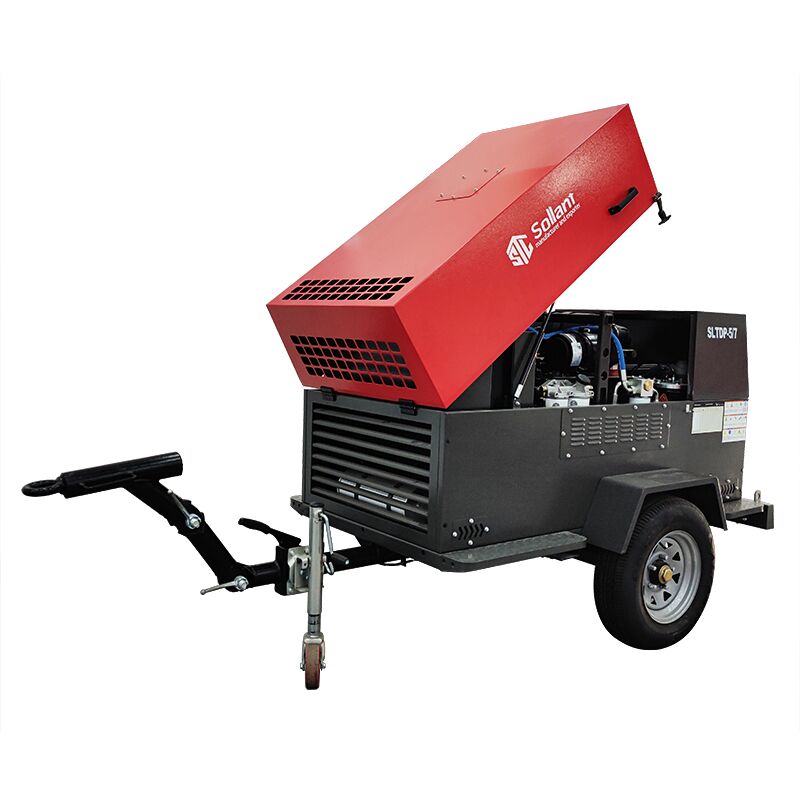
  • Diesel Portable Compressor
  • Gas Compressor
  • Specialty Compressor
  • Air Treatment
ISO 9001 Certified
24-Month Warranty
OEM & ODM Support
Factory Direct Price
All products→
Artificial Demand in Compressed Air Systems
Installation & Site Work

Artificial Demand in Compressed Air Systems

Technical Article
25 min read
US Market

Artificial demand is excess air consumption caused by running a compressed air system at higher pressure than the end uses need.

Machine builders pad their compressed air specifications. A packaging machine that runs fine at 70 psig in a competent plant gets published at 90 because the manufacturer also ships to plants with corroded pipe, no dryer, and 25 psi of distribution loss. One spec covers both. The DOE Sourcebook (DOE/GO-102003-1822, pp. 35-38) has been recommending that plants test actual minimum pressures rather than trust published values since 2003.

The compressor for the building gets selected to deliver the highest published spec plus distribution losses plus control band. 105, 110, 115 psig. Every unregulated device on every other machine operates at that pressure. A brand-new system has artificial demand on startup day because the design basis came from a warranty calculation.

Testing machines at reduced pressure with a temporary regulator is how the real minimum gets found. Most applications other than pneumatic clamping have 15 to 25 psi of headroom below published spec. The engineer who authorizes the test owns any production disruption. The savings go to the facilities electricity budget. The risk goes on the production engineer's record.

1% energy per 2 psi. Thermodynamics of compression. Supply side only.

Orifice-type loads pass more air at higher pressure. Crane Technical Paper No. 410 has the equations. 80 psig is 94.7 psia, 100 psig is 114.7 psia, ratio 1.21, nozzle at 15 scfm becomes about 18. Supply penalty times demand penalty. Combined cost of 20 psi excess on an unregulated orifice load exceeds 30%. The Compressed Air Challenge Level 2 training works through the combined calculation. Projects scoped on the simple rule understate the return by two to three times.

A venturi generator is an orifice. Air consumption scales with supply pressure. Suction cups need 15 to 20 inches of mercury, achievable at 60 psig. Running at 100 psig produces vacuum the cup cannot use.

In most installations the generator stays energized through the full machine cycle even though vacuum is needed for a fraction of it. Festo's OVEM series documentation and SMC's ZL series docs both cover vacuum-on-demand. Consumption drops 50% to 80% per generator. Add pressure regulation to 60 psig and per-station total exceeds 80% reduction. Components are $50 to $90 at current catalog pricing.

The packaging equipment belongs to production. The compressed air system belongs to facilities. Installing a vacuum-on-demand kit requires a production work order and a machine shutdown. Facilities cannot issue the work order. Production has no budget line that improves by issuing it because the electricity sits in facilities' cost center.

A flow controller between the compressor room and the plant header holds downstream pressure constant. Compressor side bounces with loading cycles. Plant side stays flat.

Without the controller, usable energy in the receiver is limited to 3 to 5 psi of frictional drop between tank and header. With it, the full band between the compressor's upper setpoint and the controller output is accessible. DOE Sourcebook Section 7 covers the receiver sizing math.

Compressor loads. Pressure jumps. Unregulated loads consume more. Pressure falls fast. Next compressor stages on. DOE Sourcebook Section 9. Invisible in hourly data. Visible in one-second logging. VSD systems mostly avoid it.

Drop the setpoint 10 psi during steady production. Log flow and power. Walk the plant with a gauge, record pressure at machine inlets under load. The DOE Sourcebook recommends both. Compressed Air Challenge Level 2 provides templates.

The physics of artificial demand has been understood for thirty years. The DOE published the Sourcebook. The Compressed Air Challenge has been running training since the early 2000s. Thousands of system assessments have been performed documenting the same findings. Average system efficiency across the installed base has not moved dramatically.

The reasons are stacked on top of each other in a way that makes them hard to separate.

OEM specification inflation is at the bottom. It sets the baseline pressure too high before the plant even starts operating.

Budget boundaries between production and facilities sit on top of that. The people who consume compressed air do not pay for it. The people who pay for it do not control how it is consumed. Sub-metering with cost allocation changes this dynamic. Kaeser's white paper "The Hidden Cost of Compressed Air" and Atlas Copco's Compressed Air Manual both discuss sub-metering, both from the perspective of vendors selling metering products, and both are correct that measurement changes behavior.

Absence of flow measurement at the system level sits on top of that. Most plants have a pressure gauge and nothing else. Managing a utility without measuring volume is managing blind.

Capital approval dynamics sit on top of that. A flow controller is a valve in a pipe. Explaining why it saves $30,000 a year requires a conversation about pneumatic storage thermodynamics that a capital review committee may not sit through. A new compressor is a large visible machine with a nameplate horsepower rating that everyone understands. The compressor gets approved. The controller does not.

Vendor incentive structure sits on top of that. Artificial demand inflates consumption. Higher consumption means more compressor capacity, more parts, more service. When a plant needs additional capacity, the vendor sizes from measured demand that includes the artificial component. The vendor sizes to what the system consumes. What the system consumes is more than what it needs. The gap between those two numbers is the artificial demand, invisible in the data. Identifying it requires an analytical exercise outside the scope of a compressor quotation. It is not the vendor's job. It is not in the vendor's commercial interest.

The compressed air assessment market exists to fill this gap. CAGI and the Compressed Air Challenge both maintain practitioner directories. There is no licensing requirement for compressed air auditing, no professional certification with enforcement mechanisms, no standardized methodology a plant manager can use to evaluate whether an auditor's findings are credible or recycled templates with the facility name swapped in the header.

And then projects that do get implemented lose savings. Within a couple of years, setpoints creep up, regulators get bypassed, new machines arrive unregulated. Compressed Air Challenge training materials discuss this extensively. Sub-metering with cost allocation to production departments is the intervention that changes behavior rather than just constraining it, because it turns compressed air from a shared invisible utility into a visible allocated cost. Whether the attention persists depends on plant culture, which varies and cannot be prescribed from outside.

The engineering is solved. The engineering has been solved for decades. Regulators, receivers, flow controllers, VSD compressors, proper sizing, vacuum-on-demand, pressure reduction testing, point-of-use surveys. All of it works when implemented.

Implementation rates remain low.

The gap between what is known and what is done is the central fact of compressed air efficiency. Artificial demand is the largest single cost item sitting inside that gap, and it persists not because plants lack access to the right technical information, but because the organizational structures around compressed air systems, the budget boundaries, the specification chains, the measurement gaps, the capital processes, the vendor relationships, the audit market, are all configured in ways that either tolerate or actively sustain unnecessary pressure and unnecessary consumption.

Nothing about this configuration is going to change because of a better white paper or a more compelling ROI calculation. It changes when the cost becomes visible to the people who control consumption, which requires metering and allocation, or it does not change.

— end —
Footer Component - SOLLANT
滚动至顶部