Our Products
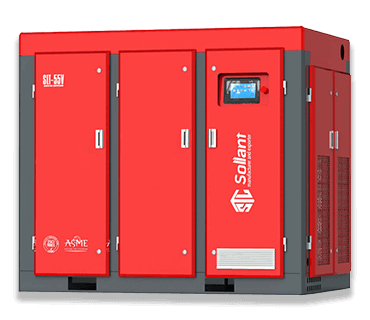
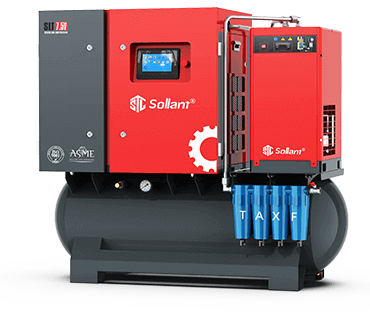
Compressed Air Solutions
  • Screw Air Compressor
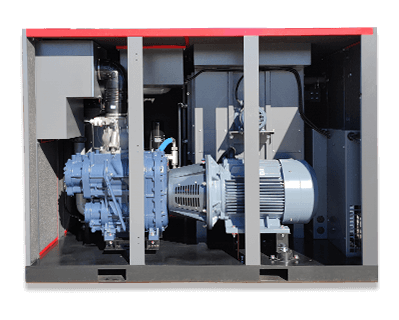
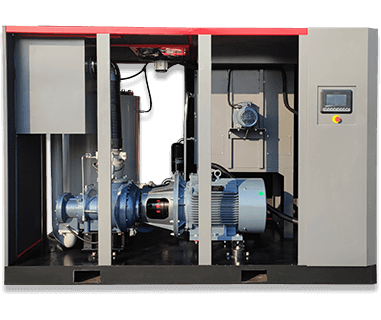
  • Oil Free Compressor
  • Diesel Portable Compressor
  • Gas Compressor
  • Specialty Compressor
  • Air Treatment
ISO 9001 Certified
24-Month Warranty
OEM & ODM Support
Factory Direct Price
All products→
Working Principles and Applications of Reciprocating Piston Air Compressors
Technical Guide

Working Principles and Applications of Reciprocating Piston Air Compressors

Technical Article
20 min read
Selection

Screw compressors cannot get past about 1.3 MPa. The rotor clearance gap allows internal recirculation that scales with pressure differential, and that gap is already at the tightest tolerance thermal growth permits. This is not a limitation anyone is working on overcoming. It is geometry.

Piston compressors reach whatever pressure the cylinder can contain. Wall thickness, material grade, bolt preload on the head. Ariel makes frames to 25 MPa. Burckhardt goes higher.

People sometimes ask why anyone would choose a piston compressor when screw machines are quieter, smoother, and easier to maintain. The answer depends entirely on the application, and the bulk of this article is about explaining where piston machines earn their place and where they do not, with emphasis on the valve and cooling issues that dominate their operating cost in ways that get chronically overlooked.

How It Works

Crankshaft turns, connecting rod converts rotation to linear piston travel, gas gets compressed inside a cylinder. Intake and discharge check valves open and close on pressure differential. Both passive, no timing mechanism.

Valves

This is where the article spends the most space because this is where the most money gets wasted.

At 720 RPM each valve plate impacts its seat 43,200 times per hour. Plates are 17-4PH stainless or PEEK composites. Springs are Inconel X-750. Seats are ground hardened steel.

Compressor valve components
Critical Component

Valve Plates & Springs

The seating surfaces pit over thousands of hours. Plate edges deform. Springs lose preload. None of this produces a trip, a fault code, or an abnormal gauge reading. The machine draws close to full-load current. The receiver sits at setpoint. A machine rated for 8 m³/min at 95 kW might be delivering 6.8 m³/min at 93 kW. The controller compensates by running more loaded hours and the gauge looks fine. The deficit appears on the electricity invoice.

DOE BestPractices audits found valve degradation and air leaks topping the energy waste list at plants with reciprocating equipment.

Intake valve wear forces the cylinder to pull deeper vacuum before the plate clears the seat, wasting crank angle on the intake stroke. Discharge valve wear forces cylinder pressure to overshoot line pressure before the plate lifts, converting the excess to heat. Both produce the same symptom from the control room: same current, less air.

Maintenance crews confronting this for the first time pull the cylinder expecting worn rings. This is the default assumption on any reciprocating machine performance complaint, and it is reinforced by most compressor maintenance training curricula, which devote substantially more classroom time to rings and rod packing than to valve condition assessment. At a Gulf Coast refinery in 2019, a contract maintenance crew spent three shifts pulling and inspecting cylinders on a two-stage instrument air compressor with declining FAD. Rings were within spec on all four cylinders. The problem was intake valve springs on the LP stage that had lost 15 percent of their free length. The valve covers had not been removed during the previous two annual turnarounds because the PM checklist did not include valve inspection as a line item. This is not an unusual story. Compressor service companies hear versions of it regularly.

API 618 Section 3.4 specifies a closing velocity limit around 3 m/s for valve plates in process gas duty. The 5th edition (2007) tightened spring fatigue life requirements relative to the 4th edition, and the specific language around valve geometry constraints at high operating speed affects which valve designs are compliant at which RPM ranges. Procurement specs tend to reference "API 618" without edition number and without calling out Section 3.4 specifically, which means the valve-related requirements that most directly affect maintenance cost get lost in the general reference.

On multi-stage rebuilds there is a specific error worth describing in detail because it recurs. Mesh-type valves from Hoerbiger have large flow channels, low pressure drop, and a large valve chamber. Plate and channel designs fit smaller chambers. When a rebuild shop puts a mesh-type valve intended for the LP stage onto the HP stage, the extra chamber volume adds clearance to the HP cylinder. The HP stage is more sensitive to clearance additions because it runs at a higher compression ratio. FAD drops. The rebuild paperwork says valves were replaced. An Ariel JGK/4 two-stage frame, for example, has different valve specifications for the first-stage and second-stage cylinders in the OEM parts manual, and the distinction is buried in a table footnote that a mechanic working from a screen on a parts ordering system can easily miss.

Cooling

The polytropic exponent n determines shaft power per unit of compressed gas. Between 1.0 (isothermal) and 1.4 for air (adiabatic). On running machines it lands between 1.2 and 1.35.

Water-cooled cylinders use integral jacket passages in the casting. Convective coefficient on the water side against cast iron depends on velocity through the passages. Typical numbers for a 100 kW class machine with a plate-type heat exchanger on the cooling loop are around 2,000 W/m²·K at design flow. Air cooling over external fins gives maybe 50 W/m²·K with clean fins and decent ambient airflow. At a compression ratio of 8 the shaft power gap between n = 1.22 and n = 1.33 is about 10 percent. On a machine running 8,000 hours a year that is 160,000 kWh on a 200 kW unit.

Scale in jacket piping restricts coolant flow over time. The rate depends on water chemistry, and plants running on hard well water without treatment see it faster than plants on municipal supply with softening. A plant in central Texas running untreated well water through compressor jackets had to rod out the jacket passages every 18 months. After installing a side-stream filtration system and a chemical treatment program, the interval extended past four years.

Seasonal variation in ambient wet-bulb temperature affects cooling tower leaving water temperature independently of any mechanical degradation. ASHRAE Chapter 40 covers this. A machine running at n = 1.22 in January might hit n = 1.30 in August with nothing wrong, purely from warmer cooling water supply.

Compressor PM programs at most industrial plants cover oil changes and valve inspections. Cooling system performance monitoring is almost always absent from the compressor maintenance scope. The compressor maintenance group owns the compressor. The facilities group owns the cooling tower. Cooling water supply temperature as a compressor performance variable falls between the two groups and gets tracked by neither. One midwestern food processing plant started logging cooling water supply temperature against compressor kW/100 cfm on the same trend screen in 2021. Within six months they identified a fouled jacket on one cylinder that was raising discharge temperature 15°C above the other cylinders on the same stage and costing an estimated $8,000 annually in excess power on that one machine.

Clearance Volume

Dead space at TDC traps gas at discharge pressure. That gas re-expands during the intake stroke before the intake valve can open. Motor works during re-expansion, no new gas enters.

ηv = 1 - c[(P2/P1)^(1/n) - 1]

c = 0.05, n = 1.3, compression ratio 3 → ~15 points of volumetric efficiency loss

c = 0.05, compression ratio 8 → ~40 points loss

Compression ratio of 15 → the cylinder barely moves net gas. Practical single-stage upper bound is ratio 8 to 10.

Staging

Adiabatic compression of air from 20°C at a ratio of 8 produces about 230°C discharge. At a ratio of 12, discharge goes past 280°C. Lubricant cokes. Carbon accumulates on valve seats and piston crowns. FM Global 7-34 covers the auto-ignition risk from carbon deposits, and the data sheet quantifies the relationship between discharge temperature, lubricant type, carbon accumulation rate, and ignition probability. A Southwestern utility experienced a compressor room fire in 2017 traced to carbon auto-ignition on the discharge side of a single-stage air compressor that had been running at a compression ratio of 7.5 with a fouled aftercooler. Discharge temperature had been running above 220°C for several months. The PM program did not include carbon removal from the discharge piping or aftercooler inspection.

Multi-stage compressor assembly
Multi-Stage

Staged Compression

Multi-stage compression breaks the total ratio into stages of 3 to 4 each with intercooling between them. Two stages for 3 to 4 MPa discharge. Three for 10 to 15 MPa. Four for CNG fueling at 20 to 25 MPa. Adding stages lowers total energy consumption and keeps each stage within safe temperature limits, at the cost of more hardware and more maintenance scope.

Intercooler fouling on multi-stage machines cascades. A fouled first-stage cooler raises second-stage inlet temperature, the second stage produces hotter discharge, the problem amplifies stage by stage. CAGI's Compressed Air and Gas Handbook addresses intercooler effectiveness degradation in Chapter 3, and the sections on approach temperature versus fouling factor are directly applicable to setting PM intervals. A two-stage machine at a glass bottle plant in Mexico had its LP intercooler bypassed temporarily during a maintenance outage in 2018 to keep the line running, and the temporary bypass remained in place for seven months because the outage work order was closed. The HP stage ran with elevated suction temperature the entire time, discharge temperature stayed above 200°C, and the HP valve life dropped from a normal 14,000 hours to under 5,000 hours before the valve failed catastrophically and shut the machine down.

Oil-Lubricated and Oil-Free

Oil at the ring-bore interface handles friction, sealing, and heat transfer. Ring life runs 8,000 to 16,000 hours. Oil carryover past the separator is a few ppm in a well-maintained machine.

Oil-free compression uses either dry-running PTFE composite rings at 2,000 to 4,000 hour ring life, or labyrinth seals where the piston never contacts the bore. Burckhardt's Laby-GI line on LNG carriers is the most visible labyrinth application in commercial service.

The procurement issue with "oil-free" is straightforward but causes repeated trouble. Some machines have a dry compression chamber with a conventional oil-lubricated crankcase, distance piece, and rod packing keeping oil out of the cylinder. Packing is a consumable. When it wears past its service limit, oil migrates into the compression chamber. The machine keeps running and the nameplate still says oil-free. Machines with no oil anywhere, using grease or dry-film bearings throughout the crankcase, are a different product at a different price.

ISO 8573-1:2010 defines air purity classes. Class 0 requires documented buyer-supplier agreement on limits tighter than Class 1. The standard addresses air quality outcomes and does not prescribe machine construction. A pharmaceutical company in New Jersey specified Class 1 oil-free air in a 2020 equipment purchase for a new cleanroom supply system. The compressor delivered Class 1 air at commissioning. Eighteen months later, a product contamination investigation traced oil aerosol in the air supply to worn rod packing on one of the two compressor cylinders. The packing had reached end of life on a normal wear schedule. The maintenance contract did not include packing condition assessment as a scheduled task, and the compressor had no oil vapor monitor on the discharge. The procurement specification referenced ISO 8573-1 Class 1 and said nothing about how that class would be maintained over the equipment's operating life as consumable sealing elements degraded.

Applications

High-Pressure Work

High-pressure work above 1.5 MPa is exclusively piston territory. PET blow molding at 3 to 4 MPa, CNG fueling at 20 to 25 MPa, hydrostatic testing, high-pressure nitrogen for laser cutting.

Intermittent Small-Volume Demand

Intermittent small-volume demand is where piston machines have an economic advantage unrelated to pressure. The machine fills a receiver, shuts off, draws nothing until cut-in. Screw compressors are limited to 4 to 6 starts per hour. When demand falls between that cycle limit and steady-state running, the screw runs unloaded at 25 to 40 percent of full-load power draw while delivering zero air. A body shop in Ontario running two paint booths on staggered schedules replaced a 37 kW load/unload screw compressor with a 30 kW reciprocating unit in 2022 and saw annual compressed air electricity cost drop from roughly CAD 14,000 to CAD 8,500. The demand profile was 6 to 8 minutes of heavy draw per booth cycle separated by 10 to 15 minutes of idle. The screw machine spent most of its running hours unloaded.

Screw compressors: limited to 4–6 start-stop cycles per hour

Unloaded power draw: 25%–40% of full load, producing no air

Body shop example: CAD 14,000 → CAD 8,500 annual electricity after switching to reciprocating

Process Gas Compression

API 618 governs reciprocating compressor procurement for refinery and petrochemical duty. The basis for using piston machines in process gas service is per-component material selection. A sour gas machine might run 316L on the liner, Monel K-500 on the rod, Hastelloy C-276 on valve trim, a specific PTFE in the packing. Four locations inside the machine exposed to different corrosion environments, four different material decisions. Screw compressors use one material for the entire rotor set. Centrifugal impellers have to meet corrosion and dynamic stress requirements simultaneously at operating tip speed, and the overlap of acceptable materials for both criteria shrinks fast in aggressive gas environments. GPSA Section 13 treats reciprocating machines as the default and provides sizing procedures on that basis.

Low-Volume Oil-Free

Below about 1 to 2 m³/min, piston machines cost less to buy and operate than oil-free screw equipment. PTFE ring changes are frequent and cheap. Above 2 m³/min the cylinder count increases, cumulative maintenance grows, and oil-free screw technology becomes more competitive.

Where Piston Compressors Do Not Fit

Continuous air supply above roughly 10 m³/min. The reciprocating machine at that capacity is large, needs an inertia block foundation, requires vibration isolation, and carries a per-cylinder parts burden that demands dedicated maintenance capability. Screw and centrifugal equipment at comparable flow rates is more compact and runs far smoother.

Vibration-sensitive installations present problems for reciprocating equipment regardless of capacity. Pressure pulsations in discharge piping and valve impact noise are inherent. Acoustic enclosures address the airborne portion. Vibration through the foundation into the building slab is separate and enclosures do nothing about it. Facilities with coordinate measuring machines, optical alignment equipment, or precision grinders near the compressor room need structural isolation engineering for a piston installation.

Selection

Above 1.5 MPa: piston. Below 1 m³/min intermittent: piston on cost. API 618 process gas: piston for per-component material selection. Low-volume oil-free under 2 m³/min: piston on ownership cost. Continuous air above 10 m³/min at moderate pressure: screw or centrifugal on footprint, vibration, and maintenance labor. Between 1 and 10 m³/min at moderate pressure with variable demand, it depends on electricity rate, floor space, noise constraints, and whether there is maintenance staff who can handle valve and ring service. Requires case-by-case evaluation with input from the end user and the equipment supplier.

Footer Component - SOLLANT
滚动至顶部