Our Products
Compressed Air Solutions
  • Screw Air Compressor
  • Oil Free Compressor
  • Diesel Portable Compressor
  • Gas Compressor
  • Specialty Compressor
  • Air Treatment
ISO 9001 Certified
24-Month Warranty
OEM & ODM Support
Factory Direct Price
All products→
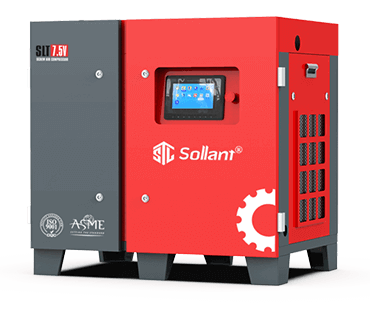
Air Compressor Short Cycling Why It Happens and How to Stop It
Comparison Guide

Air Compressor Short Cycling Why It Happens and How to Stop It

Technical Article
12 min read
Oil-Free Compressor

Short cycling kills compressor motors in one specific spot. The start winding. Thin gauge wire, low thermal mass, built to carry current for a third of a second per startup before a centrifugal mechanism switches it out of the circuit once the rotor reaches speed. Five to seven times normal running amperage flows through that winding during each start, the centrifugal switch disconnects it, and the heat from that surge dissipates during the run period and the rest period that follows.

Compress the rest period and the heat stacks. Insulation on that thin copper wire degrades on an exponential curve relative to temperature, a relationship that goes back to the Arrhenius equation applied to polymer degradation. Push ten degrees Celsius above its thermal class rating and insulation life roughly halves. The start winding gets there long before anything else in the motor because it takes the full inrush surge and has the least mass to absorb it.

Motor shops that do rewinds see the same failure over and over. Compressor comes in dead, they pull the end bells, start winding is charred, run winding looks fine. Owner assumes a defective motor. The motor was fine. Something else in the system shortened the rest periods until the start winding cooked itself.

Normal Operation

Reciprocating compressor in good working order: motor starts, pump builds tank pressure to cut-out (around 150 PSI single-stage, 175 two-stage), pressure switch opens the circuit, motor stops. The unloader valve bleeds trapped air from the pump head and discharge line, you hear a quick hiss, then silence. Pressure holds if nothing downstream draws air, or falls as tools consume it. At cut-in, the switch re-closes and the motor restarts against an unloaded pump head.

Motor manufacturers specify a maximum starts per hour derived from start winding cooling time. Exceed it, and the winding temperature ratchets upward across successive cycles with no chance to reset.

Check Valve

Close every outlet on the tank. Run the compressor to cut-out. Watch the gauge.

Do this first. Always. The check valve is behind the majority of short cycling cases. The rest of this article covers other causes, and some of them are interesting and some are obscure, and none of them matter until the check valve is cleared.

Needle does not move: check valve is fine, move on. Drops twenty PSI in the first minute: the valve has been bad for a long time and the motor has already taken cumulative damage. Drops a few PSI over several minutes: the valve is degrading, and the slow-drop case is deceptive in a way that deserves its own discussion further down.

The valve sits between the pump discharge and the tank, one-way flow, and when the sealing surface gets chewed up, tank pressure bleeds backward through the discharge line and out through the pump's reed valves. Pressure drops, switch trips, motor restarts. The operator hears the compressor kick on, figures the shop is using more air than usual, goes back to work. Weeks pass. The cycling rate creeps up and there is never a single moment where it becomes obvious.

The Ingersoll Rand SS3 and SS5 make this diagnosis harder than it needs to be. The check valve on those units is not a standalone fitting. It is part of an assembly at the tank port that also houses the unloader connection, so backflow and back-pressure-on-restart look almost identical because the components share a housing. Getting it out requires draining the tank. The assembly sits in an awkward spot that seems like it was never meant to be accessed by human hands on a regular basis. IR designed these in the 1950s and has not changed the layout since. On a DeWalt or Kobalt, by contrast, the check valve is a separate in-line brass body threaded into the tank and the swap takes five minutes.

To confirm the check valve specifically when the gauge drops with the outlet closed: disconnect the discharge tube from the tank port and cap the port with a pipe plug. If pressure holds now, the check valve was the leak path. If it still drops, the leak is elsewhere. Safety valve seat, corroded tank weld, gauge fitting. That last one is less rare than it sounds. Gauge fittings vibrate loose over years and produce a slow decay on the gauge that mimics a minor check valve problem.

Why do they fail so often. Discharge air from the pump head comes out at 300°F or higher on a single-stage pump compressing to 135 PSI. That air carries atomized oil on lubricated units, water vapor that condenses in the tank, carbon from thermally degraded oil on the valve plate, rust flakes from the tank interior. Rust gets carried toward the valve seat during pulsation, lands on it, gets pressed into the sealing surface by back-pressure, pits it. This builds over weeks and months. Cycle time shortens from eight minutes to six to four and the daily change is too small to notice.

Check valve sealing surface
Valve Sealing Surface
Discharge tube contamination
Discharge Contamination

Replacement valves cost three to fifteen dollars. Half an hour to install. The contamination that killed the first valve is still in the system though. Rust scale in the tank, carbon in the discharge tube. New valve goes in and starts getting eaten by the same debris immediately.

Flush the tank with two or three pressurized drain cycles to agitate the sediment out. Disconnect the discharge tube at both ends and run a brush through it or blow solvent through it. Then thread a sintered bronze particulate filter upstream of the new check valve, any brand. The filter catches debris before it reaches the new sealing surface. Stretches the replacement interval from about a year to four or five.

No valve kit on the market includes this filter. Quincy has included inline strainers on their QR-series reciprocating units for years, and the technology is old and proven, and it has not migrated to the consumer market. Probably a cost decision at the kit level. Every kit ships with the valve, some tape, nothing else. The filter has to be added separately.

Extra
6,000
Start Cycles / Year

Now the slow leak. This is the part where compressor owners get themselves into trouble by looking at the gauge, seeing a drop of one or two PSI over five minutes, and deciding the system is fine. In a shop running the compressor eight hours a day, a check valve leak that takes 20 minutes to bleed down to cut-in means three extra motor starts per hour. Multiply that out: three per hour, eight hours, five days, fifty weeks. That is 6,000 additional start cycles per year on a motor rated for maybe 10 to 15 starts per hour. If the gauge drops at all with the outlet closed, replace the check valve. The cost of the valve versus the cost of a motor or a rewind makes this an obvious call.

There is something else about check valves that ties into the unloader discussion coming up. On the IR SS3 and SS5, because the unloader and check valve share that same tank-port assembly, both can degrade at the same time. The check valve leaks back a little, shortening the off-period. The unloader is partially stuck, adding resistance on startup. Neither one alone looks severe. Together they cook the start winding faster than either would individually. This compound failure is a recurring problem on those specific units. Rewind shops see the IR twin-cylinder models come in more often than the installed base would suggest, and the shared housing is a big part of why.

Pressure Switch Differential and Unloader Valve

These two get grouped together not because they are similar problems but because diagnosing one usually involves bumping into the other, and because both live in or on the pressure switch housing on most small compressors.

The differential first. It is the gap between cut-in and cut-out. Narrowing it increases cycling faster than people expect because both the fill time and the rest time compress simultaneously. Going from 40 PSI to 10 PSI increases cycling rate by roughly a factor of four or five.

40 PSI Differential
VS
10 PSI Differential
4–5×

Adjusting it is simple. Two spring nuts under the switch cover on most models. Large nut sets cut-in, small nut sets differential, clockwise on the small nut widens the gap. Make sure the resulting cut-out does not exceed the tank's stamped maximum working pressure.

The adjustment is almost never the problem. What causes trouble is replacement switches with different factory defaults. Differentials are not standardized across manufacturers. A Lefoo LF10 ships with a different setting than a Condor MDR 11. The parts counter matches thread size and voltage, hands over the box, and the new switch goes in with a differential that might be 15 PSI narrower than the original. The compressor runs, pressure holds, tools work, motor starts twice as often as before. Nothing flags it. Unless someone records the trip pressures over several cycles and compares to the old settings, the elevated cycling rate goes undetected for years.

The Condor-style switches dominate the market in various OEM versions. The pressure-sensing diaphragm sits exposed to moisture and oil vapor from the pressure port. Over years it develops pinholes or loses elasticity and the switch drifts off calibration. The Furnas 69 series uses a more protected sensing arrangement and holds up better in wet environments. Costs more, harder to find locally. Something to try if Condor switches keep dying prematurely.

Unloader Valve

If there is no hiss when the compressor shuts off, stop. Fix the unloader. Nothing else matters until this is resolved.

When the unloader does not vent, the motor restarts against 80 to 140 PSI of trapped pressure in the discharge path. Single-phase motors cannot push through that from a dead stop. The rotor locks. Locked-rotor current floods the start winding for five, eight, ten seconds until the thermal overload trips. Resets, tries again, same result. Every start is a locked-rotor event with the start winding absorbing full stall amperage for seconds instead of the fraction of a second it was designed for. This destroys start windings in days. Not weeks, not months. Days. A bad check valve is a slow killer. A stuck unloader is fast.

Most small compressors put the unloader in the pressure switch housing as a small plunger. Moisture and oil residue accumulate around it. Pull the cover, clean with solvent, work it by hand. If corroded through, replace the whole switch assembly. Dry-film lubricant on the new plunger.

On Quincy and Saylor-Beall machines the unloader is a separate pilot-operated valve on the discharge tube, bigger body, easier to service, same failure mode.

Temperature-dependent sticking is maddening. Cool morning, residue around the plunger is stiff, plunger moves freely, compressor runs fine. Warm afternoon, residue softens, plunger binds, compressor short cycles. Looks electrical because the symptom correlates with time of day. Technicians chase wiring and capacitors for hours. Cleaning the plunger would fix it. The mental model for "works in the morning, fails in the afternoon" points toward electrical causes, and in this case the model is wrong. It is a mechanical problem with temperature-sensitive behavior.

Confirmation test for a stuck unloader: bleed the tank to zero through the drain valve, start the compressor. Starts clean at zero, stalls at operating pressure: unloader.

Tank Sizing

If the compressor cycles normally with the outlet closed and only short cycles under tool load, nothing is broken. The pump cannot keep up with the tool. No amount of diagnosis fixes a sizing mismatch.

Compressor marketing obscures this. Tank volume gets the biggest number on the box. CFM at working pressure, the only number that matters for sustained tool operation, gets buried. Some manufacturers quote displacement CFM instead of delivered CFM, inflating the number by 15 to 30 percent. Displacement is theoretical swept volume. Delivered is what comes out at the regulator at 90 PSI. A compressor marketed at 12 CFM displacement might deliver 9. Connect a DA sander rated for 11 and within two minutes of continuous sanding, once the stored air burns through, the mismatch shows.

Inflated
15–30%
Displacement vs Delivered

The tank delays the mismatch. It does not fix it. A 60-gallon tank on an 8 CFM pump will not sustain a 12 CFM tool. A 30-gallon tank on a 14 CFM pump runs the same tool all day.

Second receiver tank helps for intermittent loads. For continuous high-draw tools, more pump capacity is the only fix.

Air Leaks, Thermal Overload, Pump Wear

These three get less space because they are either easy to find or slow enough that people tend to notice them on their own.

Leaks. Start at the drain valve. The petcock-style drains on consumer compressors sit in contact with the worst moisture and grit the tank produces. They develop slow weeps. In shops where the compressor sits on concrete, the moisture evaporates, leaves a mineral stain, everyone assumes it is condensation. A single 1/16-inch orifice at 100 PSI bleeds around 3.5 to 4 CFM. On a compressor delivering 8 or 10 CFM, two small leaks consume a huge percentage of available output. Close the outlet to confirm the compressor itself holds pressure, then soapy water on every connection. Including factory-installed fittings. Gauge port, safety valve threads, pressure switch fitting. Those were torqued once on the assembly line and have been vibrating ever since. PTFE tape or anaerobic sealant on threads, new O-rings where needed.

About the petcock specifically: it is a quarter-turn brass valve with minimal thread engagement and a seat exposed to grit-laden water. A ball valve with a lever handle is a ten-dollar upgrade that eliminates the most common single leak source on consumer compressors. Automatic timer-actuated drain valves ($30 to $60) work well for shops on a schedule.

Thermal Overload

Time the off-periods between consecutive starts. Pressure-driven cycling produces consistent off-periods: forty-five seconds, forty-five seconds, forty-five seconds. Thermal overload produces irregular off-periods: forty-five seconds, two and a half minutes, a minute twenty. The inconsistency separates the two.

Pressure-Driven
45s, 45s, 45s
VS
Thermal Overload
45s, 2½m, 1m20

Ventilation is the cause in most cases. Compressor in a corner, fins packed with dust, no airflow. Altitude is a factor when a compressor changes location. At 5,000 feet, air density drops about 17% from sea level, which means less cooling across the fins and a thinner intake charge that makes the pump work harder. A compressor that ran fine at sea level overheats at elevation with no mechanical change. If thermal cycling started after a move to higher elevation, stop replacing parts.

Compressor cooling fins and ventilation
Cooling & Ventilation
Oil level sight glass on compressor pump
Oil Level Monitoring

Oil level on splash-lubricated pumps matters for thermal performance as much as lubrication. The oil cools the cylinder wall. Low oil means high temperatures.

Pump Wear

Pump wear is slow. The compressor gets louder month by month, takes longer to fill the tank, runs hotter. People notice this, unlike check valve leaks which are invisible. On small compressors, valve plate degradation outpaces ring wear. The discharge reed runs hot, flexes constantly, accumulates carbon on its seat. Replacing the valve plate alone at around 1,500 operating hours maintains efficiency without a full teardown. An IR thermometer on the discharge helps gauge condition: leaking reeds produce higher discharge temperatures. If air puffs backward out of the intake filter during compression strokes, the intake reed is leaking.

Interval
~1,500
Operating Hours

Full rebuild: check the cylinder bore first. Rings in a scored bore will not seal. Light scoring can sometimes be honed if oversized rings exist for that pump. Most consumer pumps do not offer oversized ring options. Deep scoring means replacing the cylinder or head.

Pressure Switch

Pressure switch failure as a standalone cause is uncommon. When a switch fails, it trips at erratic pressures (ruptured diaphragm), fails to trip off (welded contacts), or chatters near cut-out (unstable diaphragm). A separate known-accurate gauge on the tank, watched over several cycles, confirms or eliminates the switch in minutes. Consistent trip points with continued short cycling means the switch is not the cause. The switch gets blamed far more than it deserves because it is the most visible electrical component.

Diagnosing the Problem

Close the tank outlet valve. Cycling stops: downstream issue. Cycling continues: internal. Ten seconds, cuts the problem space in half.

1
Outlet Closed

Gauge drops: check valve. Gauge holds: move to step 2.

2
Listen & Record

Unloader hiss, then differential trip pressures.

3
Thermal & Pump

Feel housing, watch off-period regularity, time a fill.

Outlet closed, cycling continues, gauge drops: check valve. Gauge holds: listen for the unloader hiss at shutdown. No hiss: unloader. Hiss sounds normal: write down cut-in and cut-out over several cycles, check the differential. Differential looks right: feel the motor housing, time the off-periods. Irregular off-periods: thermal overload. Everything else cleared: time a fill cycle for pump efficiency. A notepad and a watch, twenty minutes.

Compressors can have two problems at the same time. A check valve leaking slowly, adding a couple extra starts per hour, combined with a replacement pressure switch that shipped with a narrower factory default, adding five or six more. Fix the check valve, cycling improves, does not stop.

Rewind shops report that a significant percentage of the compressors that come in with dead motors had multiple contributing factors. The check valve was leaking and the differential was narrow. Or the unloader was partially stuck and the intake filter was clogged, adding thermal load. Single-cause short cycling is the easy case.

Maintenance

Drain the tank after every session. The check valve and unloader suffer from internal rust long before tank corrosion becomes a structural issue. Automatic drain valves remove human consistency from the equation. Or swap the petcock for a ball valve at minimum.

Intake filter replacement on schedule, sooner in dusty environments. A woodworking shop clogs filters two or three times faster than a clean garage.

Oil checks before each session on splash-lubricated pumps.

Valve plate replacement at around 1,500 hours.

Leak audits twice a year with soapy water.

A compressor matched to its workload runs fewer cycles, runs cooler, wears slower. If the tools have outgrown the compressor, maintenance slows the decline. At some point a larger compressor is the only remaining option.

Keep a log. Write down the fill time from cut-in to cut-out once a month with all outlets closed. A composition notebook zip-tied to the compressor frame. Date, fill time, oil level, any notes. Over a year, that notebook turns gradual degradation into a visible trend. A fill time that has crept up by 30% over six months is a pump that needs plates before the motor starts taking the heat for the pump's declining efficiency.

Footer Component - SOLLANT
滚动至顶部